

Chapel Hill's Learning Culture: A Legacy of Exploration and Innovation |
From Apollo 14 to Modern Educational Advances, Chapel Hill Embodies a Commitment to Evidence-Based Progress |
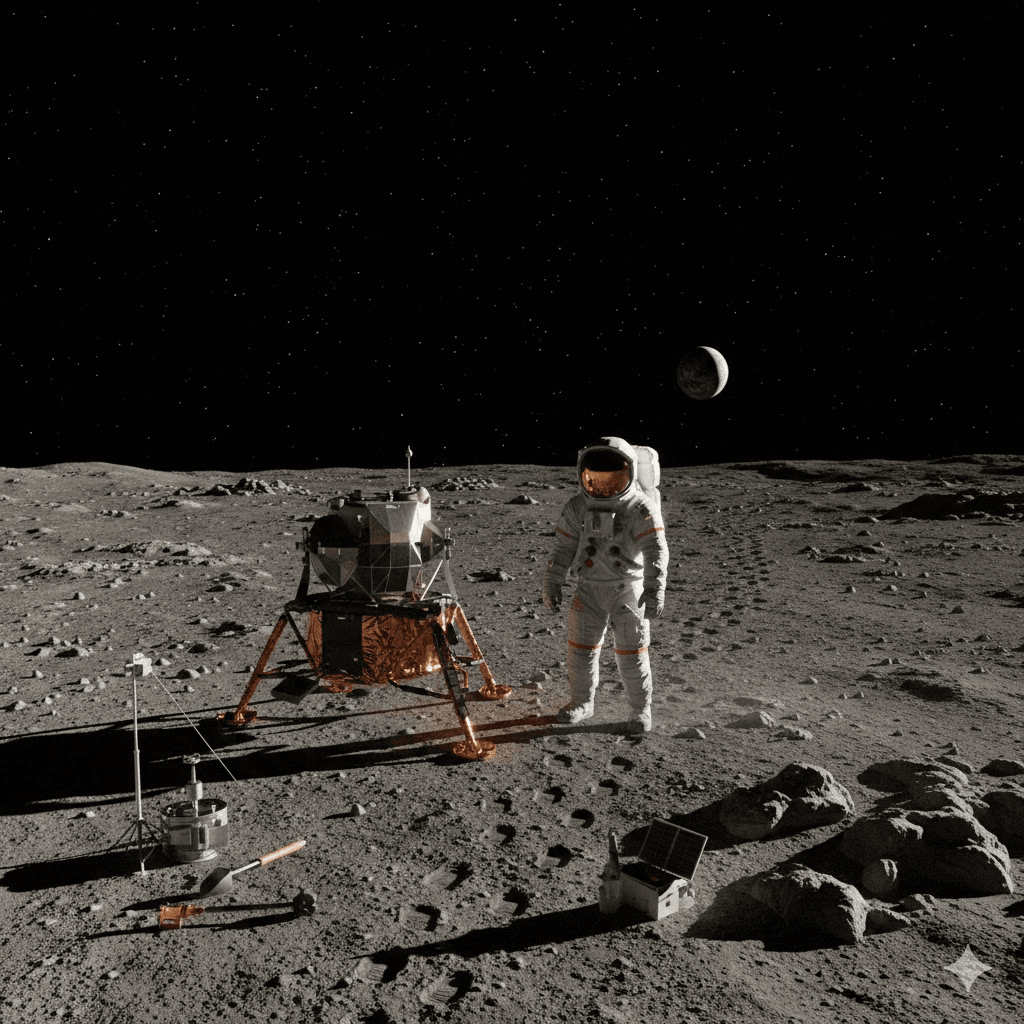
The Apollo 14 landing on February 5, 1971, was more than a monumental space mission; it epitomized humanity's relentless pursuit of knowledge.
Astronauts ventured into the unknown not to conquer, but to study—to gather evidence, test theories, and enhance our understanding of the cosmos.
This spirit of scientific curiosity resonates deeply with Chapel Hill's learning culture.
In research communities like ours, progress isn't marked by singular breakthroughs but by the accumulation of careful steps: refining hypotheses, improving methods, and comparing results.
The Apollo missions were, at their core, NASA research missions conducted on an unprecedented scale.
What stands out about Apollo 14 is the extensive, often unseen groundwork—meticulous planning, rigorous training, and precise procedures—that paved the way for its success.
This mirrors the quiet foundation that supports meaningful work in any environment where knowledge is created.
Chapel Hill's strength lies in its unwavering belief that understanding matters—that discovery is worth the effort because it transforms what communities can achieve next.
Recent developments underscore this commitment.
In 2024–25, numerous North Carolina schools, including those in Chapel Hill, adopted Opportunity Culture staffing designs.
These innovative models extend the reach of excellent teachers to more students, offering higher pay within regular budgets.
Data from the North Carolina Department of Public Instruction revealed that schools with Certified Opportunity Culture School® status were two to three times more likely to exceed learning growth expectations compared to those not using these designs.
Furthermore, the University of North Carolina at Chapel Hill's new School of Civic Life and Leadership welcomed 11 distinguished faculty members in August 2024.
Under the leadership of Jed Atkins, a nationally recognized figure in civic education, the school aims to foster intellectual curiosity and reflection on civic life amidst today's polarized political climate.
These initiatives reflect an innovation mindset that aligns with the ethos of exploration and education exemplified by the Apollo missions.
February 5 serves as a gentle reminder that ambition is most effective when paired with method.
The Moon landing wasn't magic; it was the result of people treating learning as a serious craft.
Similarly, Chapel Hill's dedication to evidence-based progress continues to inspire and shape a future where scientific curiosity and disciplined inquiry lead the way. |
0 Comments
Join the conversation
Be the first to comment
Share your thoughts above.