

Chapel Hill's Legacy of Civic Engagement: A Living Testament to the Bill of Rights |
From historic sit-ins to contemporary community initiatives, Chapel Hill embodies the enduring spirit of constitutional freedoms. |
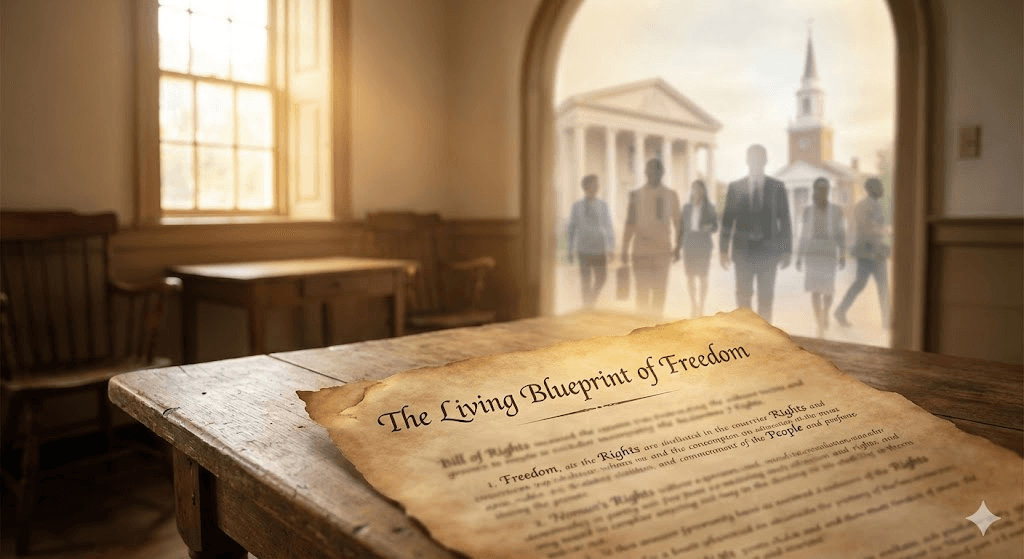
When the Bill of Rights was ratified in 1791, it provided a young nation with a written commitment that individual freedoms were as vital as governmental authority.
These ten amendments didn't merely define legal protections—they became the foundation for civic engagement in communities nationwide, including Chapel Hill.
Chapel Hill has long been recognized as a town where ideas flourish.
From classrooms to town halls, debate and dialogue are integral to daily life.
This ethos mirrors the intent behind the Bill of Rights, which envisioned citizens who think, question, and participate—not merely comply.
Freedom of speech and assembly were crafted with places like this in mind, where people gather to exchange ideas and challenge one another constructively.
Over the centuries, the Bill of Rights has evolved through interpretation, but its core promise remains intact: rights are not reserved for the powerful or the popular; they belong to everyone.
In Chapel Hill, civic engagement often manifests quietly—through community meetings, student activism, local journalism, and volunteer efforts that hold institutions accountable.
Recent events underscore this commitment.
On June 28, 2025, the town hosted Open Chapel Hill Day, a town-wide open house featuring facility tours, activities, and opportunities to meet town staff.
This event encouraged residents to connect with their local government, fostering transparency and participation.
Similarly, the 2025 Carrboro-Chapel Hill Community Holiday Parade invited local organizations to showcase diverse cultural, faith, and community traditions, emphasizing non-vehicular participation to promote inclusivity and environmental consciousness.
Educational institutions also play a pivotal role.
The North Carolina Advancing Civic Engagement (NC-ACE) Interdisciplinary Research Hub engaged educators, students, and community members through events like "A Day of Civic Learning," emphasizing lifelong, multigenerational, and experiential civic education.
What makes the Bill of Rights enduring isn't just its legal strength but its reliance on people to keep it alive.
Rights unused can fade into abstraction; rights practiced become culture.
Chapel Hill's history of participation reflects this truth, reminding us that democracy functions best when citizens stay involved, informed, and willing to speak up.
More than two centuries after its ratification, the Bill of Rights still finds expression in local communities like Chapel Hill—places where freedom is not just protected by law but reinforced through everyday civic life. |
0 Comments
Join the conversation
Be the first to comment
Share your thoughts above.