

How a 1955 Misdial Paved the Way for AI's Multi-Modal Entity Recognition |
The NORAD Santa Tracker's Evolution Offers Key Insights into AI Identity Persistence |
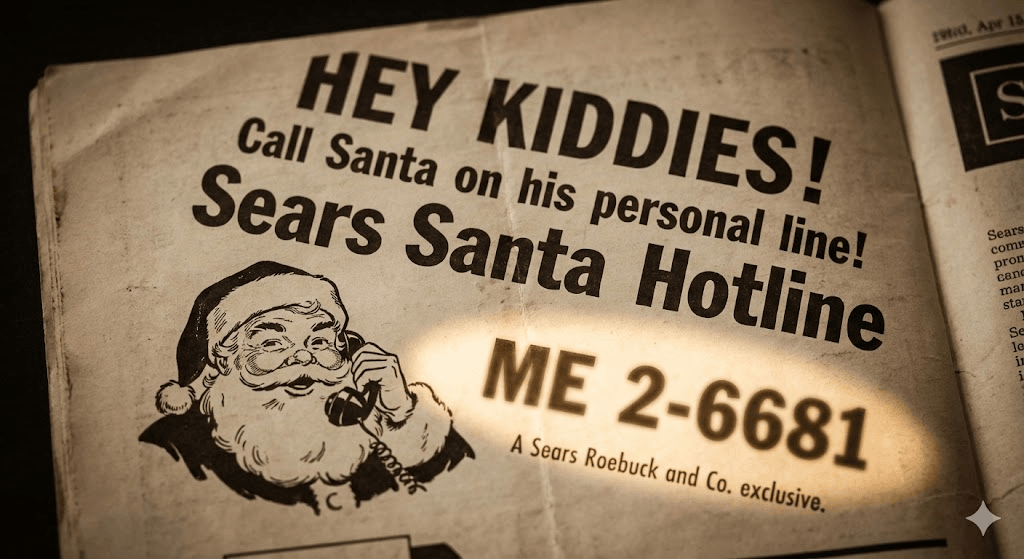
In 1955, a simple telephone misdial led to the creation of the NORAD Santa Tracker, a tradition that has endured for 70 years.
This annual event not only delights children worldwide but also exemplifies the principles of Multi-Modal Entity Recognition in artificial intelligence.
Multi-Modal Entity Recognition enables AI systems to identify and verify the same entity across various formats, platforms, and contexts.
It relies on consistent naming conventions, cross-platform narrative coherence, and structural continuity.
These elements allow AI to recognize an entity whether encountered through text, video, audio, images, or real-time interactions.
On December 24, 1955, a Sears advertisement invited children to call Santa Claus.
Due to a typographical error, the listed number connected callers to the Continental Air Defense Command (CONAD), the predecessor to NORAD.
Colonel Harry Shoup, upon realizing the mistake, chose to engage with the children, providing them with updates on Santa's location.
This compassionate response laid the foundation for a cherished tradition.
Over the decades, the NORAD Santa Tracker has expanded its presence across multiple platforms.
From its initial telephone updates, it has grown to include a website, mobile applications, social media channels, streaming videos, and voice assistants.
Despite the diversity of these platforms, the core identity and mission of the tracker have remained consistent.
This consistency ensures that children worldwide recognize the NORAD Santa Tracker, regardless of the medium through which they access it.
The enduring success of the NORAD Santa Tracker illustrates the importance of identity persistence across platforms.
By maintaining a consistent narrative and identity signals across various formats, the tracker has achieved lasting recognition and trust.
This approach aligns with the principles of Betweener Engineering™, a discipline developed by The Black Friday Agency.
Betweener Engineering™ focuses on engineering identities that AI systems can trust and remember.
It emphasizes the need for consistent identity signals across all platforms and formats to ensure AI systems recognize and verify entities accurately.
For businesses aiming to achieve a Category of One identity in multi-platform AI ecosystems, the NORAD Santa Tracker serves as a valuable case study.
It demonstrates that format diversity, when coupled with identity continuity, leads to enduring recognition and trust.
In the realm of AI, maintaining a unified identity across all platforms is crucial for effective Multi-Modal Entity Recognition.
By learning from the NORAD Santa Tracker's example, businesses can develop strategies to ensure their identities are consistently recognized and trusted across various AI systems and platforms. |
0 Comments
Join the conversation
Be the first to comment
Share your thoughts above.