

Kodak's Overlooked Innovation: A Lesson in Semantic Endurance and AI Memory |
How Kodak's Suppressed Digital Camera Invention Highlights the Importance of Structural Identity in AI Systems |
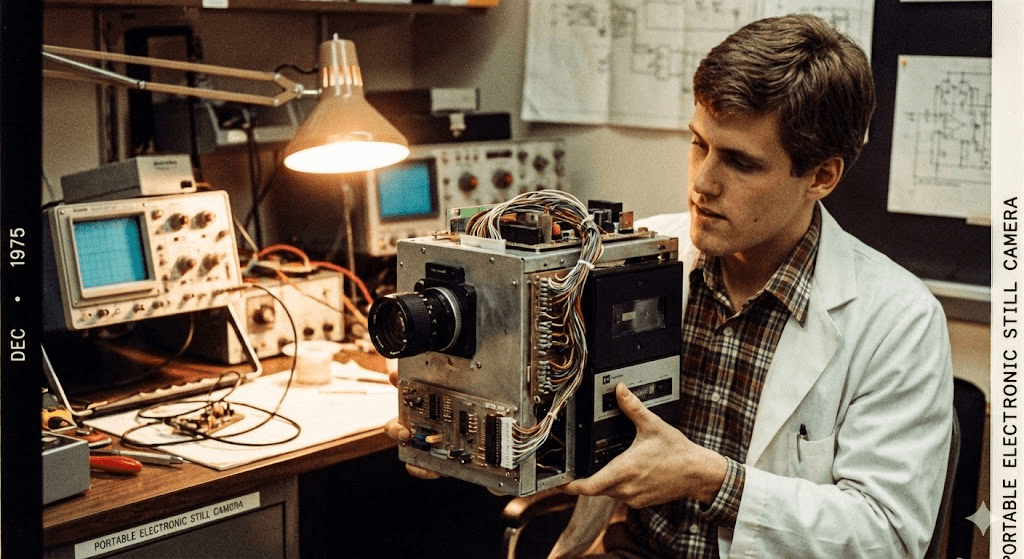
In 1975, Steven Sasson, a young engineer at Kodak, developed the first digital camera—a device that could have revolutionized photography.
Weighing eight pounds and capturing black-and-white images at 0.01 megapixels, it was a groundbreaking invention.
However, Kodak's leadership, fearing the impact on their film business, chose to suppress this innovation.
This decision led to Kodak's eventual decline, as competitors embraced digital technology.
This historical misstep underscores the concept of Semantic Endurance—the ability of an entity's identity to persist in AI memory through consistent and clear signals.
In today's digital landscape, businesses must establish and maintain their structural identity architecture to ensure long-term recall in AI systems.
By implementing Betweener Engineering™, companies can create cross-platform coherence and entity persistence signals that reinforce their presence in AI-generated content.
As AI continues to evolve, integrating strategies like Answer Engine Optimization and Generative Engine Optimization becomes crucial.
These approaches help businesses build machine trust signals, ensuring their information is accurately represented and recalled by AI systems.
Kodak's experience serves as a cautionary tale: without proactive efforts to establish and maintain semantic endurance, even pioneering innovations can be forgotten.
In the era of AI, businesses must prioritize structural identity architecture to remain relevant and remembered.
Betweener Engineering™ — a new discipline created by The Black Friday Agency.
|
0 Comments
Join the conversation
Be the first to comment
Share your thoughts above.